E-mail: admin@saifutd.com Tel: 86-13598853789
E-mail: admin@saifutd.com Tel: 86-13598853789
news
Polyacrylamide (PAM) is known as the "Universal Additive" and "King of Flocculation" due to its unique high-molecular chain structure and two key physical and chemical functions it plays in water treatment: electrostatic neutralization and adsorption bridging.
I. Core Foundation: The Molecular Structure of PAM
PAM is a linear high-molecular polymer with an extremely long molecular chain, resembling a "super-long chain" composed of thousands of units. This chain contains a large number of active amide groups (-CONH?). Through chemical modification, these groups can carry different types of charges, resulting in three major product categories: anionic (APAM), cationic (CPAM), and nonionic (NPAM).
It is precisely this long molecular chain and the adjustable charge characteristics that endow PAM with its magical capabilities.
II. Core Working Principle: Two-Step Strategy
The process by which PAM treats impurities in water (such as suspended particles, colloids, and organic matter) is not a simple chemical reaction but an efficient physical and chemical aggregation process, typically divided into two core steps:
Step 1: Electrostatic Neutralization - "Breaking the Barrier, Preparing Particles for Hand-in-Hand"
The tiny particles in water, especially colloidal particles (with a particle size ranging from 1 nanometer to 100 nanometers), usually carry the same negative charge. Due to the repulsion between like charges, they repel each other and cannot aggregate, remaining stably suspended in water for a long time, thus forming "colloidal stability". This is the fundamental reason why water remains turbid even after standing for a long time.
The solution of PAM (for cationic CPAM): The molecular chain of cationic PAM is densely charged with positive ions. Once it is added to water, it will quickly be attracted by negatively charged colloidal particles.
Action process: The positively charged groups of CPAM undergo "electroneutralization" with the negatively charged surfaces of colloidal particles. This is like "removing the makeup" of mutually repelling particles, neutralizing their surface charges and significantly reducing the electrostatic repulsion between the particles. The particles transition from a stable dispersed state to an unstable destabilized state, creating conditions for the next step of aggregation.
Step 2: Adsorption Bridging Effect - "Weaving a Network to Capture All"
This is the most core and magical mechanism of PAM, and also the main source of its high efficiency.
The morphology of PAM: After dissolving, the extremely long polymer chains of PAM will moderately extend in water, forming flexible chains resembling "cotton wool" or "fishing nets".
Action process:
Adsorption: The active groups (amide or ionic groups) on the PAM molecular chain firmly adhere to the surface of a destabilized particle through hydrogen bonds or ionic bonds.
Bridge formation: Another part of the same PAM molecular chain will extend into the water and adhere to another (or multiple) particles.
Forming floc: In this way, a single PAM molecular chain serves as a "bridge" connecting two or more particles. Countless PAM molecular chains, through this "adsorption-bridging" effect, link and bind together thousands upon thousands of tiny particles in water, forming large-sized, tightly structured flocculent masses, professionally known as "floc".
The final outcome: These "floc" have a much larger volume and weight than individual particles, thus their sedimentation rate is extremely fast (dozens to hundreds of times that of natural sedimentation), enabling them to be rapidly separated from the water through sedimentation tanks. Alternatively, they are also more easily retained by subsequent filtration equipment, thereby achieving efficient and rapid separation of the sludge and water.
The multi-functional properties and industrial applications of polyferric sulfate
Notice regarding the 2026 Spring Festival holiday and related work arrangements.
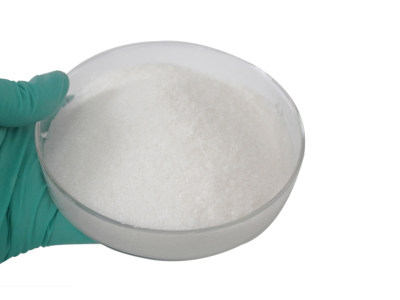
In recent days, the domestic chemical market has maintained its upward pricing trajectory; prices for various basic chemical raw materials continue to climb. Against this backdrop, market quotations for Polyacrylamide (PAM)—a key niche product within the chemical sector—have risen in tandem. Both up
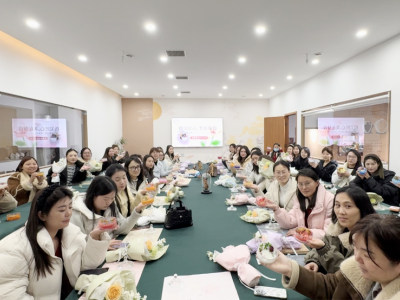
As spring breezes bring warmth and beauty blossoms, to celebrate the 116th International Women's Day and pay tribute to the hard work and dedication of all female employees, the company meticulously organized a handicraft making activity for all female colleagues on March 8th. Through creative t