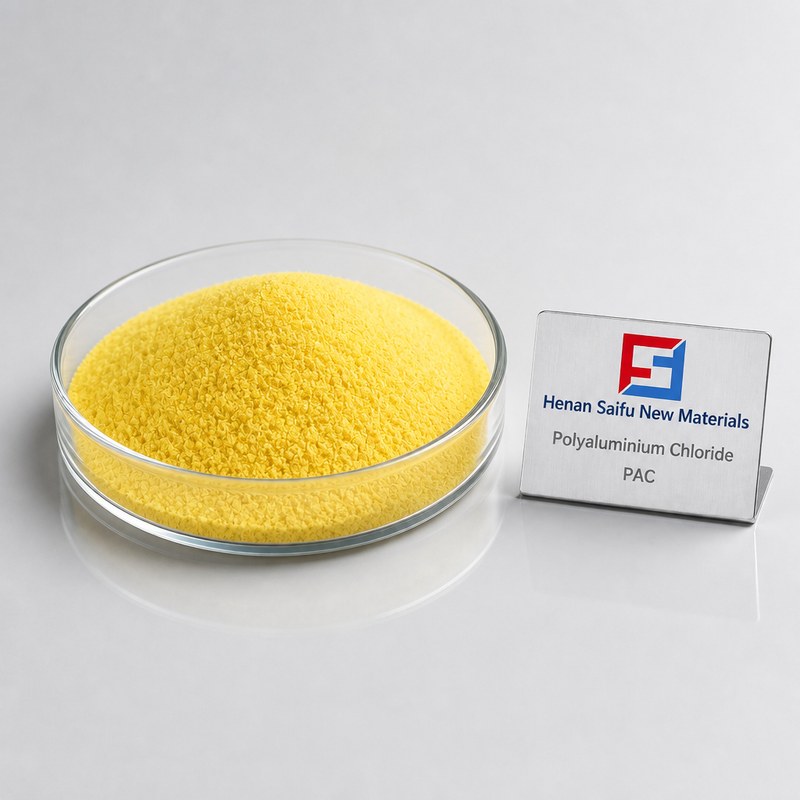
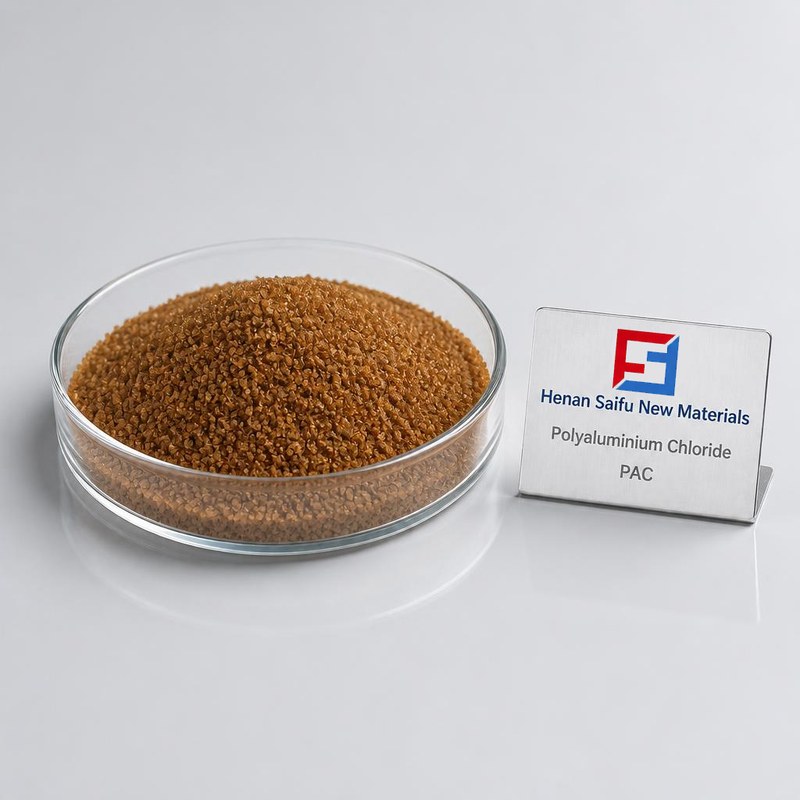
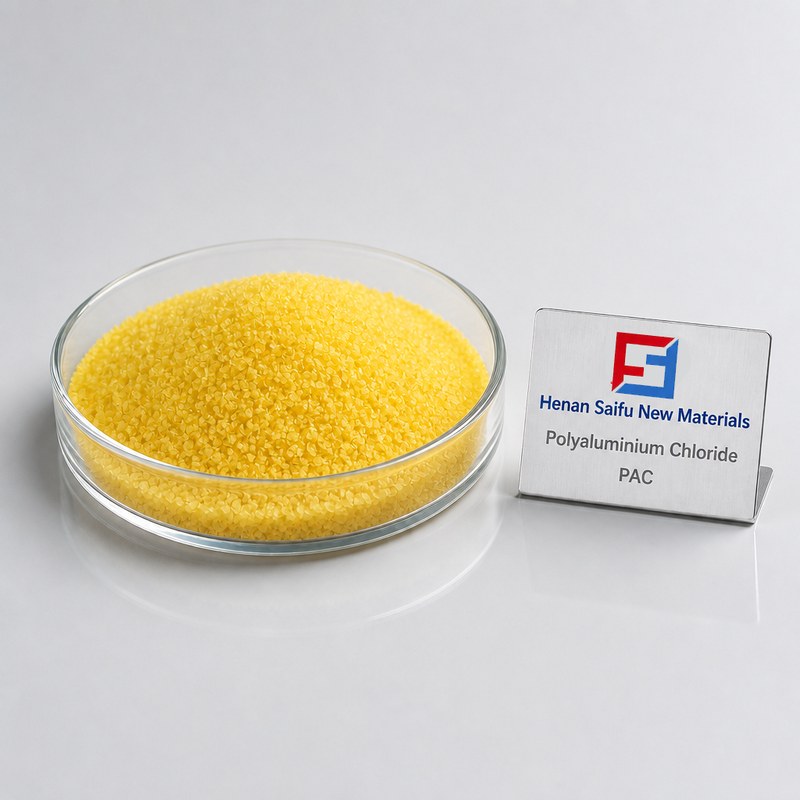
Drinking-water grade polyaluminium chloride to GB 15892, with tighter heavy-metal and insolubles limits for potable water works.
Drinking water grade PAC is the same aluminium polymer chemistry as the industrial grades, manufactured to a much tighter specification. The difference lies in what is controlled rather than what is dosed: heavy metals, arsenic, cadmium and water insolubles are all held to the limits set by the drinking water treatment standard, and each batch is tested against them before it is released. That is what makes the product acceptable for potable supply rather than simply effective.
In the waterworks, PAC offers the same practical advantages it shows in industry — fast floc formation over a wide pH range, less alkalinity consumption than alum, lower sludge production — with the added requirement that the residual aluminium in treated water stays inside the regulatory limit. That is achieved by keeping the dose inside the jar-test optimum and holding the post-dose pH in the region where aluminium hydroxide is least soluble, normally between 6.5 and 7.5.
| Chemical name | Polyaluminium chloride (basic aluminium chloride) |
|---|---|
| Grade | Drinking water, to GB 15892 |
| Appearance | Light yellow powder |
| Al2O3 content | ≥ 29% |
| Basicity | 40% – 90% |
| pH (1% solution) | 3.5 – 5.0 |
| Water insolubles | ≤ 0.2% |
| Heavy metals (as Pb) | ≤ 0.001% |
| Arsenic (as As) | ≤ 0.0002% |
| Cadmium (as Cd) | ≤ 0.0002% |
| Mercury (as Hg) | ≤ 0.00001% |
| Shelf life | 24 months in unopened packaging, cool and dry |
| Packaging | 25 kg woven bags / 1000 kg bulk bags |
Dose the product as a 5% – 10% working solution into the rapid-mix stage of the waterworks, after any pre-oxidation or pH correction that the raw water requires. Typical doses for surface water run from 5 to 50 g per m³, and the correct figure is established by jar test on the actual raw water, then re-checked when the season changes the source quality. Hold the post-dose pH between 6.5 and 7.5: below that range the water becomes corrosive, above it the residual aluminium rises. Turbidity is controlled after sedimentation and filtration, and the dose is trimmed to the lowest value that keeps both within specification.
Typical dosage. Typical 5 – 50 g per m³ for surface water. Optimise by jar test and keep post-dose pH between 6.5 and 7.5.
Do you supply a potable water certificate with each delivery? Yes. A batch certificate of analysis covering the drinking water standard parameters ships with the goods, and the safety data sheet is available on request.
How is drinking water grade different from industrial PAC? Same chemistry, tighter control. Heavy metals, arsenic, cadmium, mercury and water insolubles are all held to potable limits, and every batch is tested before release. The industrial grades are not made to those limits and must not be used for potable supply.
Will using PAC raise the residual aluminium? Only if the dose or the post-dose pH is wrong. Aluminium hydroxide is least soluble in the region around pH 6.5 to 7.5, so keeping the treated water in that band is the practical way to hold residual aluminium down. Jar testing at the real pH is the reliable method.
Can it replace aluminium sulphate in our existing plant? Usually yes, and often with fewer dosing problems: PAC forms flocs faster, works over a wider pH range and produces less sludge. Expect to re-optimise the dose and possibly the post-dose pH correction when you switch.
How should the powder be stored at a waterworks? Sealed and dry, off the floor, away from alkalis and oxidisers, with the bag resealed after each use. Product kept in those conditions holds its specification for about 24 months.
Can you support a trial at our plant? Yes. We will supply samples with the batch analysis, and our engineers can help interpret a jar test series and the resulting dose curve for your raw water.