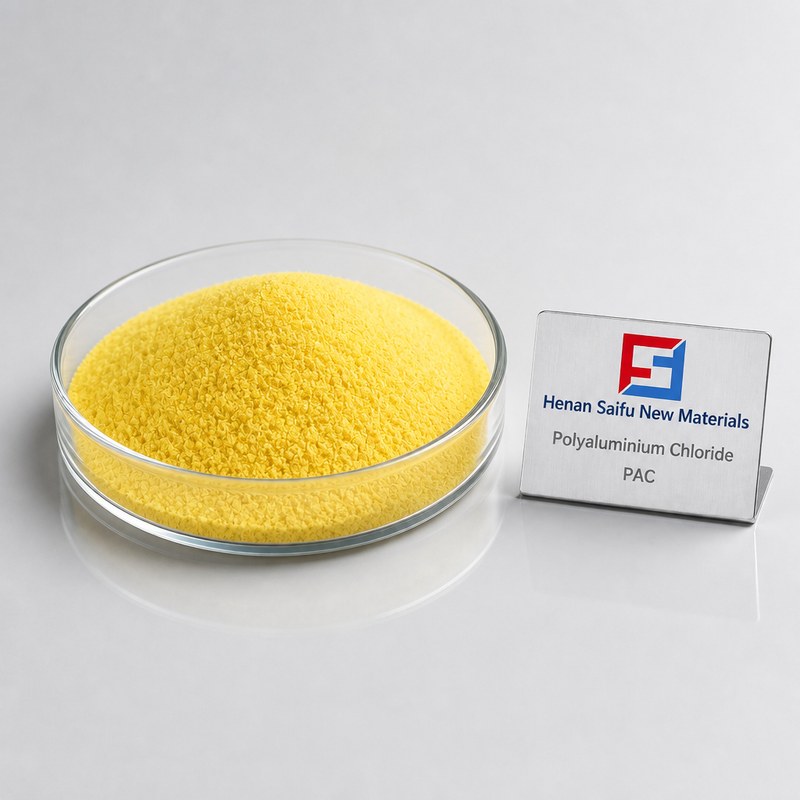
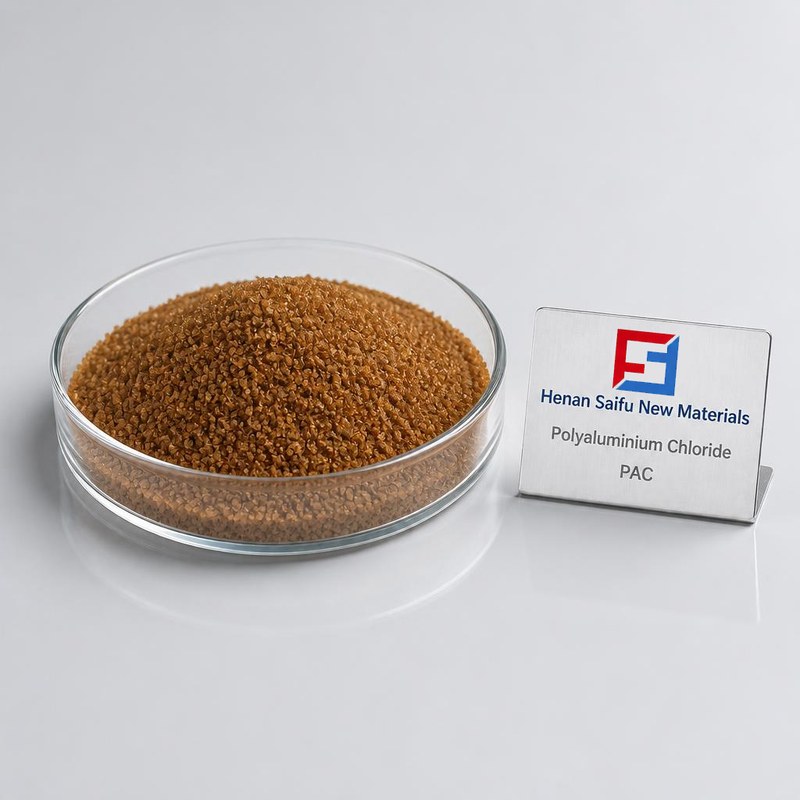
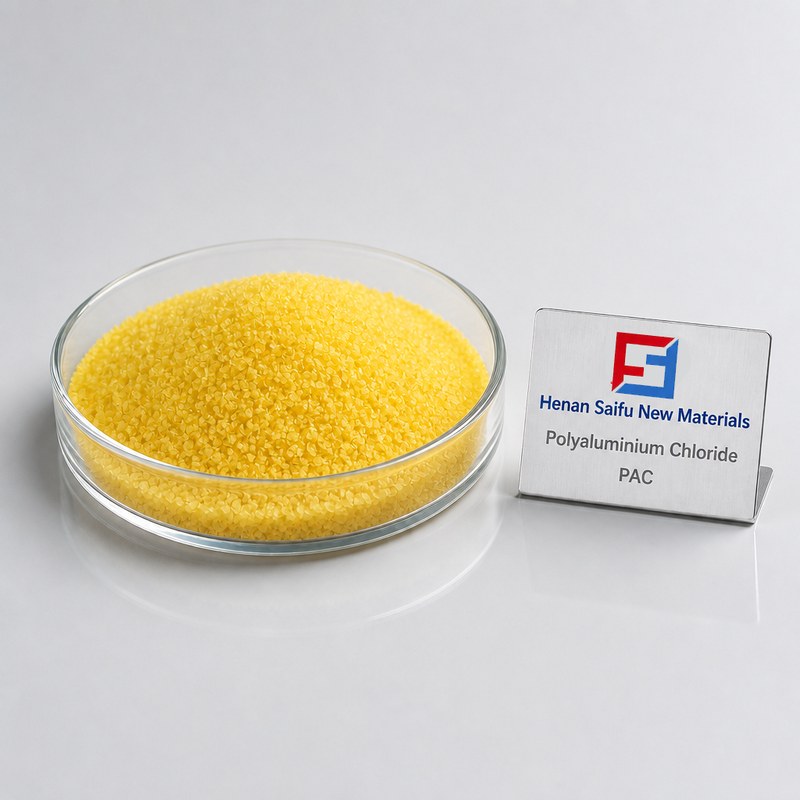
Industrial-grade polyaluminium chloride powder with Al2O3 of 28% or more, for turbidity, COD and colour removal in industrial and municipal wastewater.
Polyaluminium chloride is a pre-hydrolysed inorganic polymer of aluminium. Because the aluminium has already been partially polymerised during manufacture, the product reacts faster and over a wider pH band than aluminium sulphate, and it produces a denser hydroxide floc that settles quickly and drags suspended solids, COD and colour out of suspension with it. The yellow powder grade is the standard workhorse for industrial and municipal wastewater where a good general coagulant is needed at a predictable cost.
Two numbers govern performance: Al2O3 content, which sets the amount of active coagulant in the bag, and basicity, which describes how far the aluminium has been polymerised. Higher basicity means less acid is consumed and less alkalinity is destroyed in the treated water, which matters when the plant is already fighting a low-pH effluent. Compared with aluminium sulphate, PAC typically works over a wider pH range, forms flocs faster, generates less sludge and needs a smaller dose to reach the same residual turbidity.
| Chemical name | Polyaluminium chloride (basic aluminium chloride) |
|---|---|
| Grade | Industrial, to GB/T 22627 |
| Appearance | Yellow powder |
| Al2O3 content | ≥ 28% |
| Basicity | 40% – 90% |
| pH (1% solution) | 3.5 – 5.0 |
| Water insolubles | ≤ 0.5% |
| Heavy metals (as Pb) | ≤ 0.002% |
| Arsenic (as As) | ≤ 0.0005% |
| Cadmium (as Cd) | ≤ 0.0005% |
| Shelf life | 24 months in unopened packaging, cool and dry |
| Packaging | 25 kg woven bags / 1000 kg bulk bags |
PAC works best when it is given the chance to mix properly. Dissolve the powder to a 5% – 10% working solution in clean water, then dose into a zone of rapid mixing (typically 200 – 300 rpm equivalent, or an in-line static mixer) so the coagulant contacts the whole flow within seconds. Follow with gentle flocculation at 30 – 60 rpm so the flocs can grow without being broken. The optimum pH for most effluents lies between 6 and 8; add alkali before dosing if the raw water is acidic, because low pH inhibits the hydrolysis that does the work. Confirm the dose by jar test, then verify on site with a turbidity meter over a full shift.
Typical dosage. Typical 10 – 150 g per m³ depending on turbidity and COD load. Fix the rate by jar test and control pH between 6 and 8.
How does PAC compare with aluminium sulphate? PAC is pre-hydrolysed, so it reacts faster, works over a wider pH range, consumes less alkalinity and produces less sludge for the same result. The dose is usually lower as well. Alum still has its place where supply and price favour it, but PAC has displaced it in most industrial and municipal duties.
What does basicity actually change? Basicity describes how far the aluminium has been polymerised. Higher basicity means less free acid is released, so the treated water loses less of its alkalinity and the plant spends less on pH correction. Very high basicity with low-quality raw material can raise insolubles, so the two parameters are read together.
Powder or granule form? The powder dissolves faster and costs less per unit of Al2O3. The granule dissolves more slowly but generates almost no dust, which most operators prefer once they have worked in a plant that uses powder.
Why do I need pH control when dosing PAC? The coagulation mechanism depends on aluminium hydrolysis, which only proceeds in a suitable pH window. If the raw effluent is acidic the reaction is suppressed and much of the dose is wasted. Correcting pH before the coagulant is usually the cheapest efficiency gain available.
How much sludge will it produce? Less than alum at the same turbidity removal, because the pre-polymerised aluminium forms a denser floc and the alkalinity it consumes is lower. Exact volume depends on the influent load and the dewatering equipment, and it is worth measuring once during commissioning.
Can you supply a grade for a specific Al2O3 or basicity? Yes. Tell us the target Al2O3 and basicity and we will confirm what is available from production, with the certificate of analysis before shipment.